
Aktuelles
WAITING FOR GODOT
by Samuel Beckett
WAITING FOR GODOT is considered an epoch-making play of the century. Since its premiere in Paris in 1953, Beckett's masterpiece has puzzled audiences. Beckett lays clues only to blur them again immediately afterwards.
Two men wait. Estragon and Vladimir, companions in transition, stand in a place that is nowhere – a patch of earth, a barren tree. Destitute and hungry, they await the arrival of a third person, an enigmatic stranger named Godot. They do not know what exactly he will bring. But this name, which dominates all their thoughts and conversations, carries the weight of salvation, of change in their dreary existence, and of the simple hope that tomorrow will not be like today.
Beckett's characters are people in limbo. Suspended between times, without certainty, without purpose. This existential limbo takes many forms: it manifests itself in exile, in endless transit, in statelessness, or simply in banal stagnation, in the everyday hopelessness of interrupted biographies. For those who know no arrival, the present becomes a waiting room – a place that keeps everything open and at the same time promises nothing. In Waiting for Godot, this intermediate world takes centre stage: the ordeal of those who are on the move but cannot progress; the great weariness of those who have nothing but the hope that tomorrow will bring something different.
People build their lives on the stories they tell themselves. It is easier to live with vague hope than with the acceptance of our grey present. Beckett shows the struggle for meaning in a world that refuses to speak, and the insistence on staying alive long enough to hear an answer.
Waiting is part of every human life. Few can testify to this as accurately as prison inmates. How do you fill your time when every day is the same? How close do we get to our fellow sufferers when we can no longer rely on anything else? How does a person who is always waiting change?
Together with the ensemble of the Plötzensee Prison, the production explores the inner landscape of waiting, expanded by elements of mask play developed in a workshop with the Geese Theatre Company from Birmingham. It shows us how fragile identity becomes in a state of uncertainty – and how much people cling to the idea that someone could come and change everything.
But when asked who or what Godot is, Beckett once said: ‘If I knew who Godot was, I would have said so in the play.’
This is becoming uncomfortable.
Performed by the aufBruch prisoner ensemble in the JVA Plötzensee: Alex, Brendon, Charly, Eri, Ibrahim Al-Khalil, Moxx, Pablo.
Director Peter Atanassow Stage design Holger Syrbe Costume design Anne Schartmann Dramaturgy Franziska Kuhn Musical Coach Vsevolod Silkin Video Pascal Rehnolt Production management Sibylle Arndt Assistant director Marlene Zuz Technicians Moh Koulaghassi, Lukas Maser Graphic design Dirk Trageser Mask workshop Andy Watson, Liz Brown, Dave Snook (Geese Theatre Company, Birmingham)
Tickets: 18 € / 12 € (reduced) available on 10th January 2026
Information on tickets and admission requirements
Go directly to the online shop here
Funded by grants from the Senate Department for Justice and Consumer Protection and by funds from the ‘Cultural Bridge’ exchange programme of the Sociocultural Fund.
In cooperation with Plötzensee Prison, the Volksbühne am Rosa-Luxemburg-Platz and the Geese Theatre Company, Birmingham.
aufBruch is supported by the Association of Friends and Sponsors of Prison Theatre in Berlin e.V. and numerous private donors.
Photos


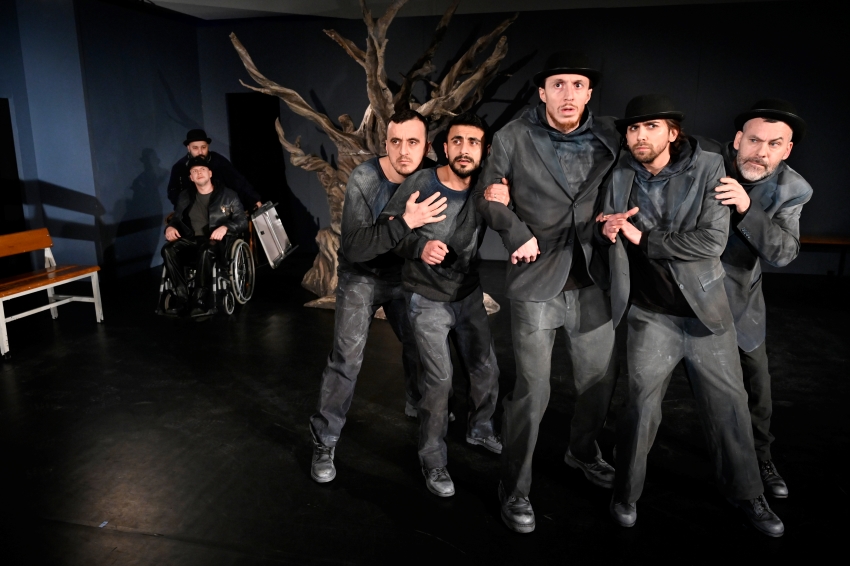
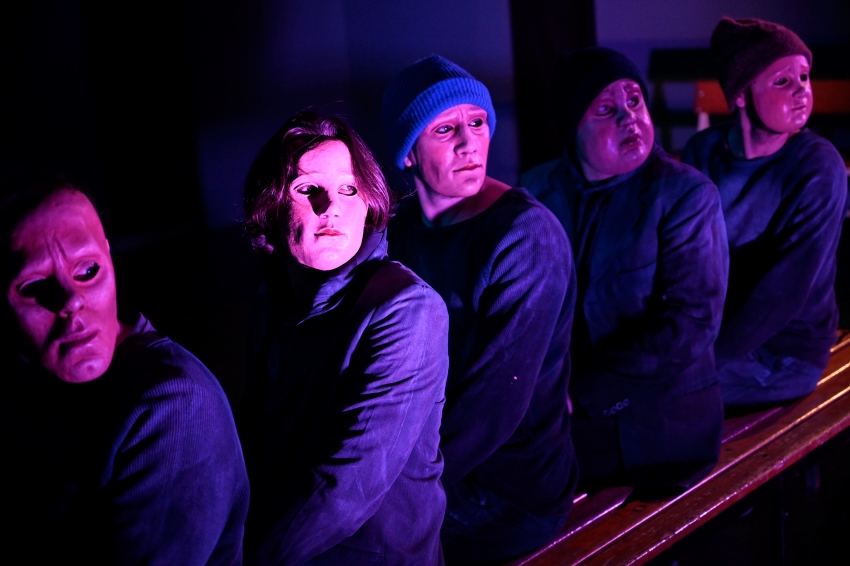
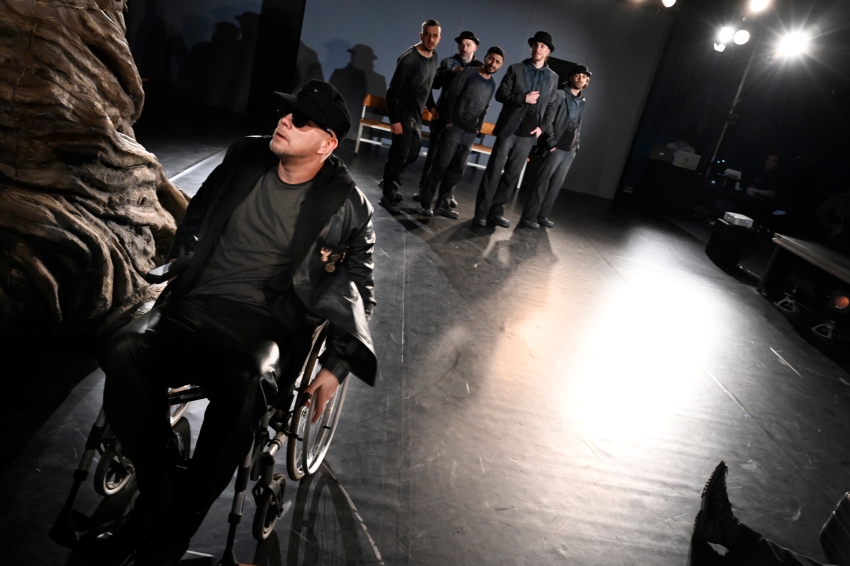


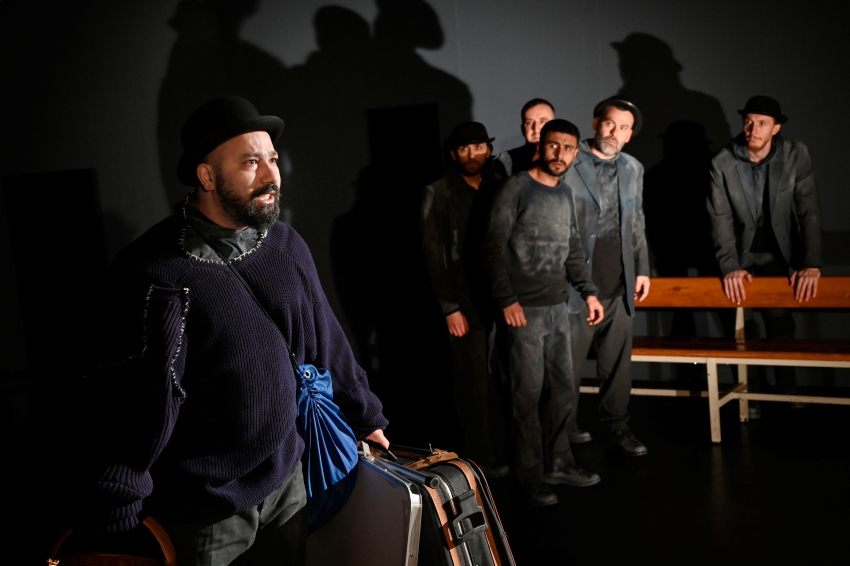
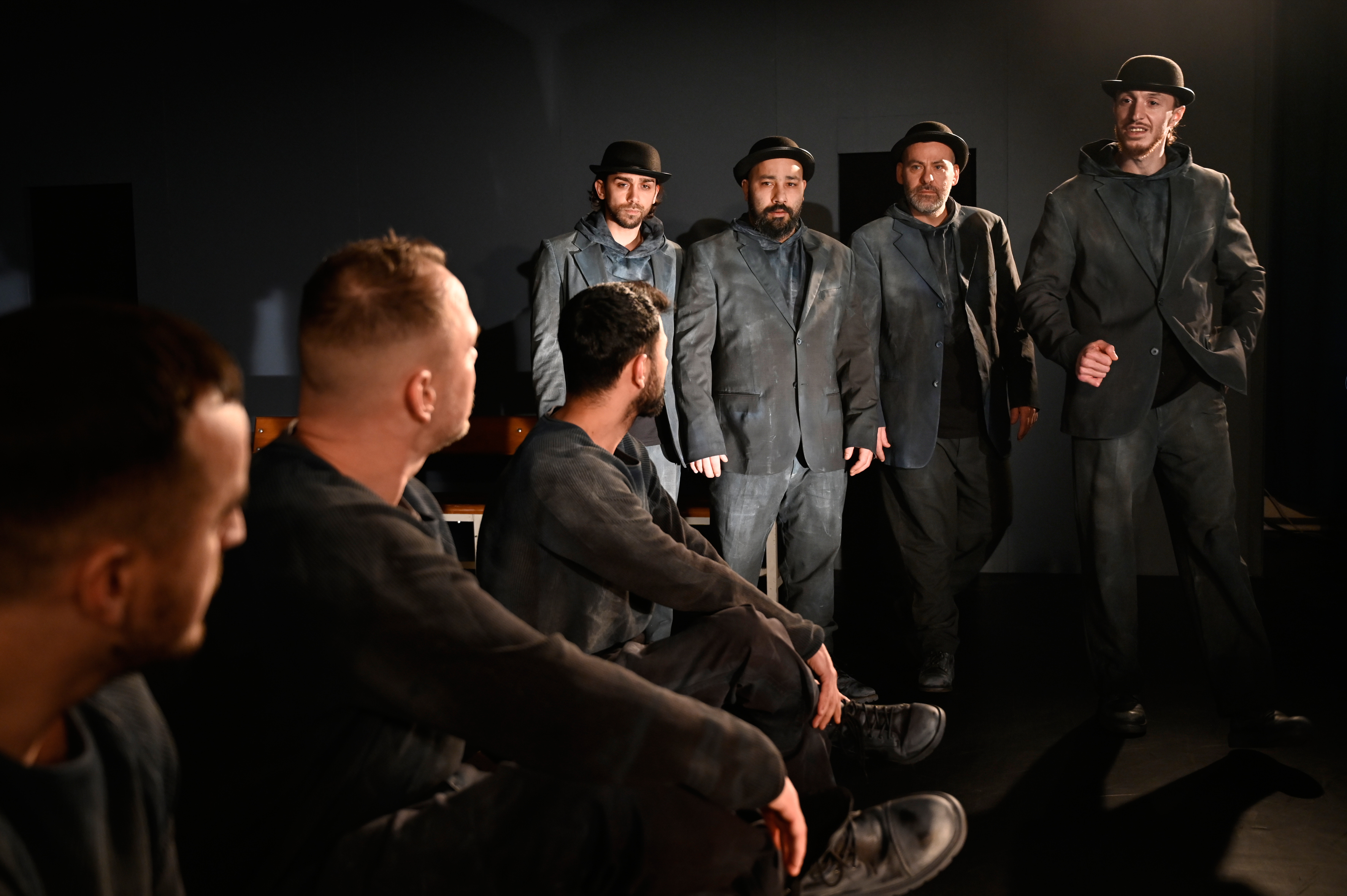
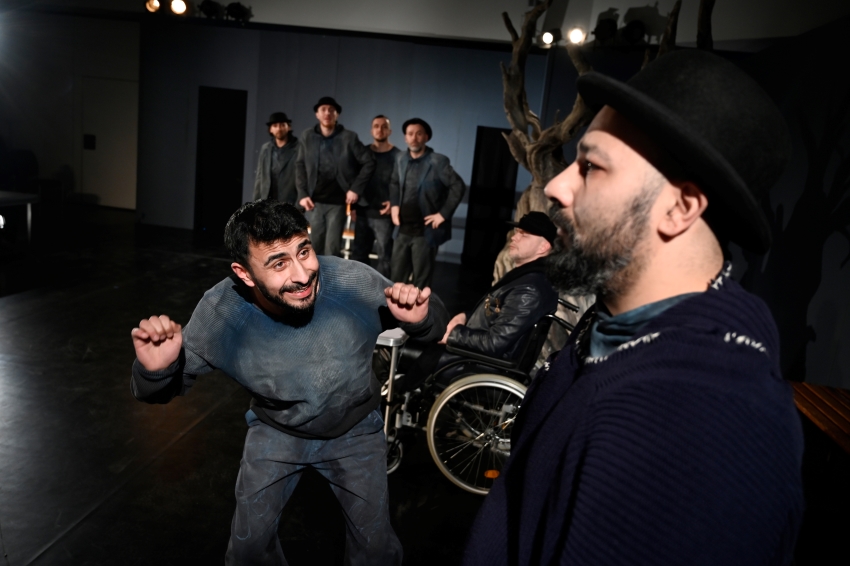
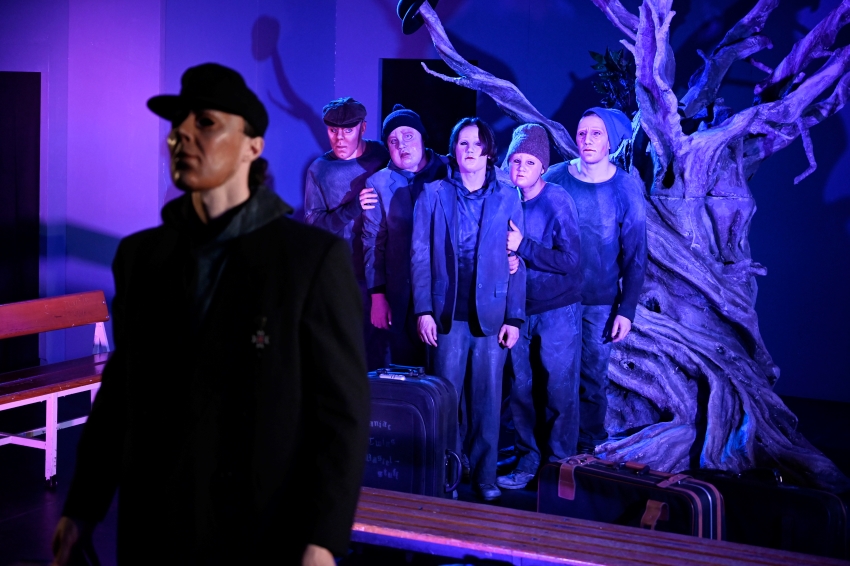
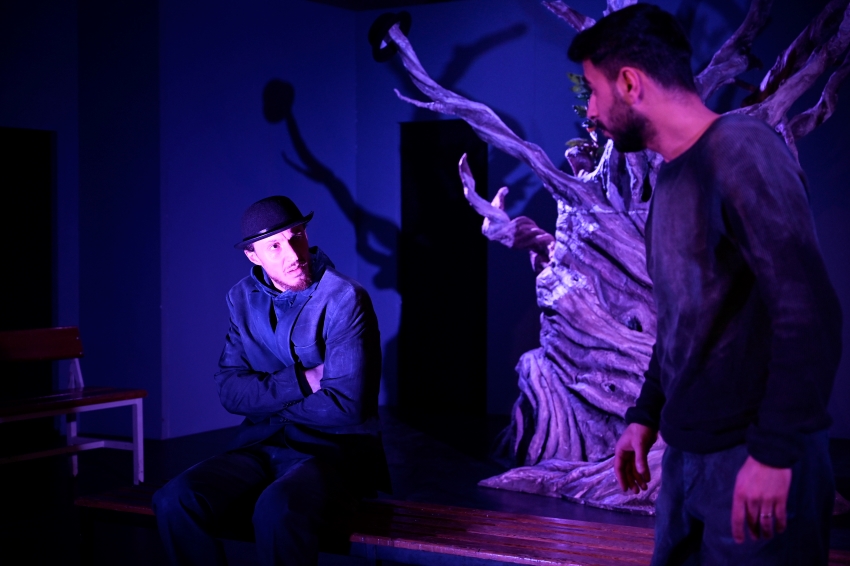
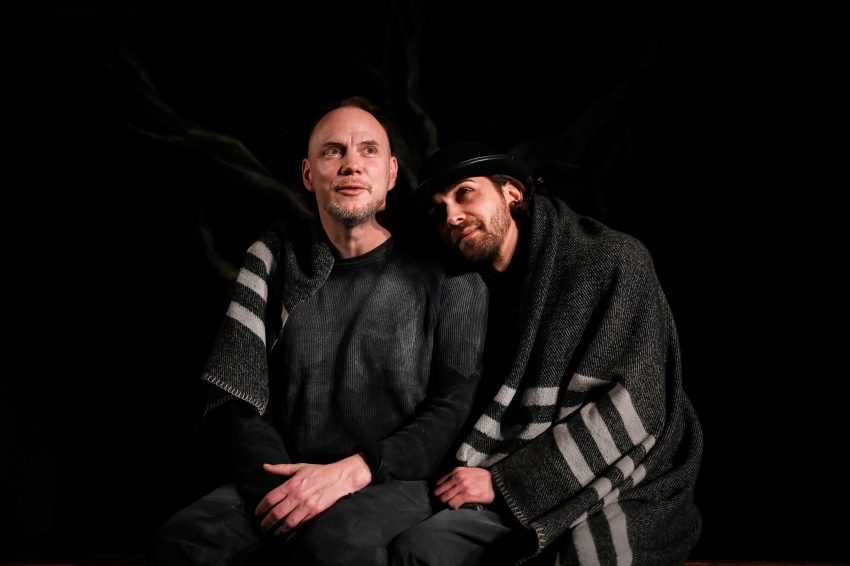
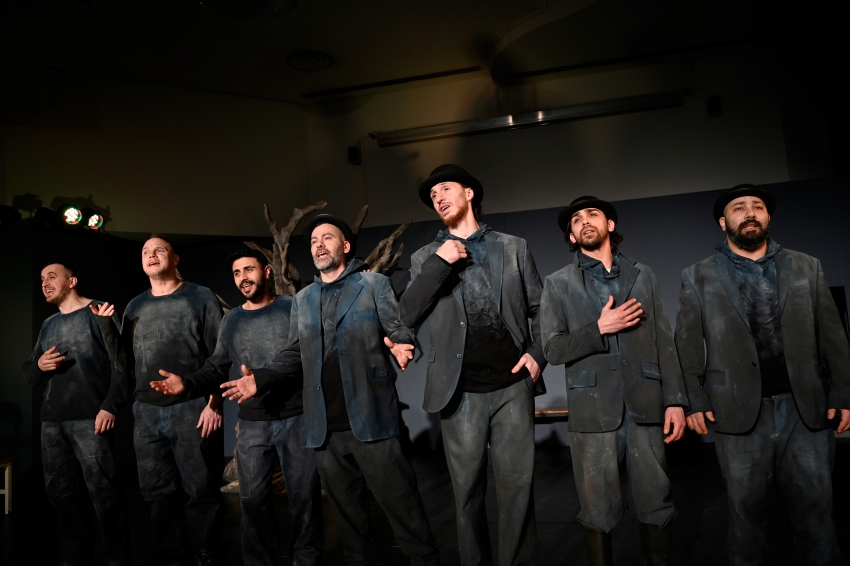
Photos: Copyright Thomas Aurin.
Any use only with the prior permission of aufBruch / Thomas Aurin.
Press

Das meistgespielte Theaterstück in den Gefängnissen der Welt
In der JVA Plötzensee in Berlin wird „Warten auf Godot“ von Häftlingen aufgeführt. Es ist ein rauerer und ehrlicherer Beckett als der, den man auf den großen Bühnen oft sieht. Dass „Godot“ das meistgespielte Stück hinter Gittern ist, hat einen besonderen Grund.

aufBruch Berlin: Mit Masken ins Spiel

„Warten auf Godot“ in Plötzensee: Eine großartige Beckett-Aufführung mit Häftlingen
Ein Theatererlebnis der besonderen Art, mit Menschen, deren Alltag aus Warten besteht: Die Gruppe „Aufbruch“ spielt Samuel Becketts Klassiker.
von Rüdiger Schaper

Treten und getreten werden
Das Berliner Gefangenentheater »Aufbruch« inszeniert Becketts »Warten auf Godot« in der JVA Plötzensee
von Erwin Grave

Vor Ort in Plötzensee: Theaterprojekt in der JVA Charlottenburg
Berlin-Plötzensee ist vielen vor allem als Naherholungsgebiet im Westen der Stadt bekannt – und als Ort historischer Erinnerung. Doch hinter hohen Mauern, mitten in Charlottenburg, liegt die Justizvollzugsanstalt Plötzensee. Genau hier entsteht derzeit in Zusammenarbeit mit dem „aufBruch“-Theater ein bekannter Theaterklassiker.

Warten auf Godot im Gefangenentheater aufBruch – Rezension
Mit dem Stück „Warten auf Godot“ (Samuel Beckett, 1953) ist mal wieder ein großer Wurf des legendären Gefängnistheaters aufBruch in Berlin gelungen, das Stück soll überhaupt, laut WELT, das meistgespielte Stück in den Gefängnissen der Welt sein. Kein Wunder, wartet nicht jeder Gefangene tagtäglich 24 Stunden lang? Die Umsetzunmg im aufBruch war entsprechend gut, die Premiere führte zu standing ovations.
von Anja Röhl

Das Berliner Gefangenen-Theater "Aufbruch" zeigt in der JVA Plötzensee ab Mittwoch das Stück "Warten auf Godot" – die Darsteller allesamt Insassen. Am Dienstag war Generalprobe.
von Svenja Stemick

Performance venue:
JVA Plötzensee / Kultursaal
Friedrich-Olbricht-Damm 17
13627 Berlin
Directions:
S-Bahn 41/42 Beusselstraße,
Bus 106 & 123 Seestraße/Beusselstraße
Start of performance: 6 p.m.
Doors open: 5 p.m.
Last admission: 5.30 p.m.
NO LATE ADMISSION