
History
MAN EQUALS MAN
by Bertolt Brecht
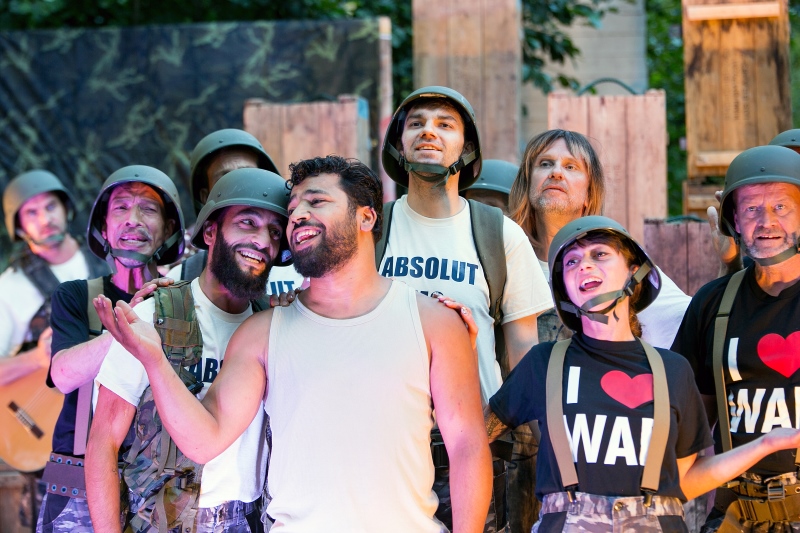
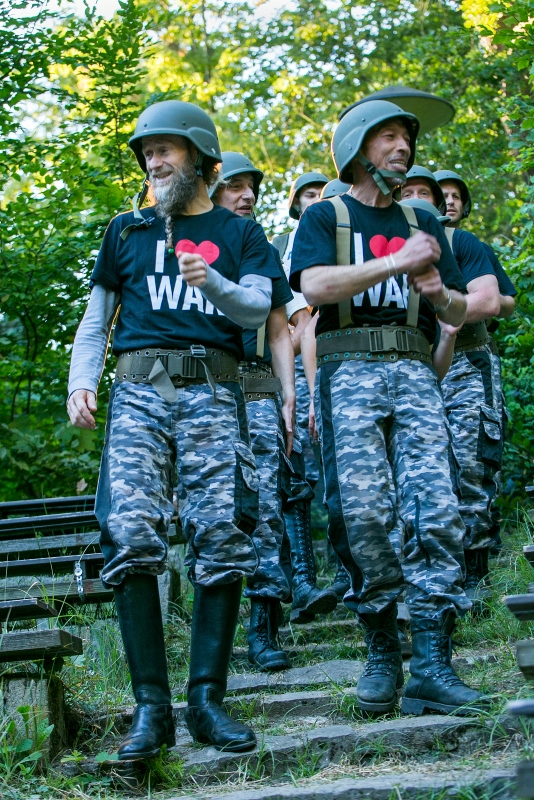
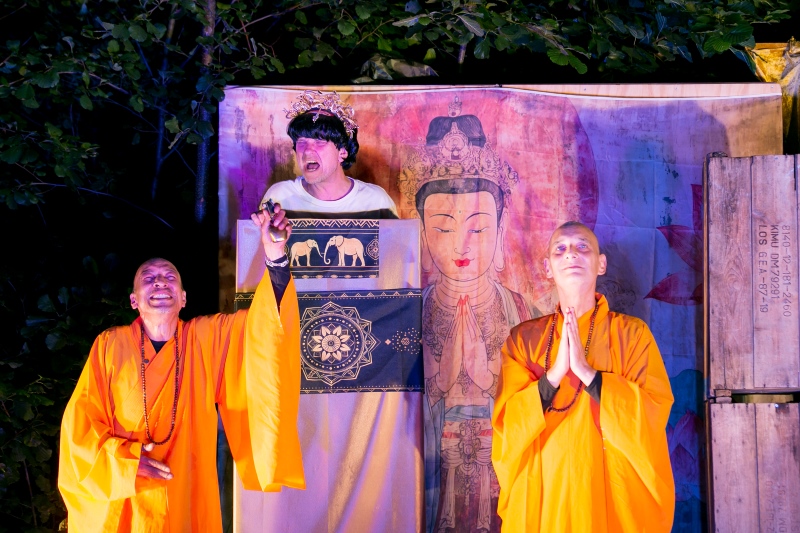
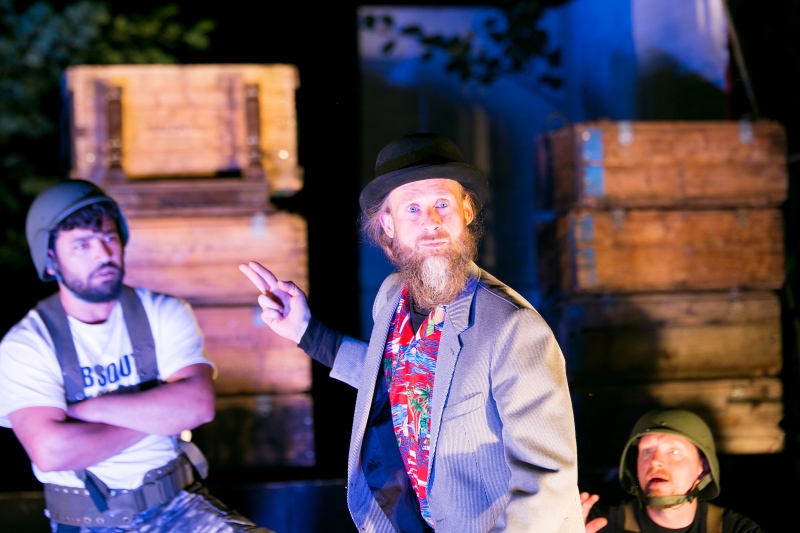
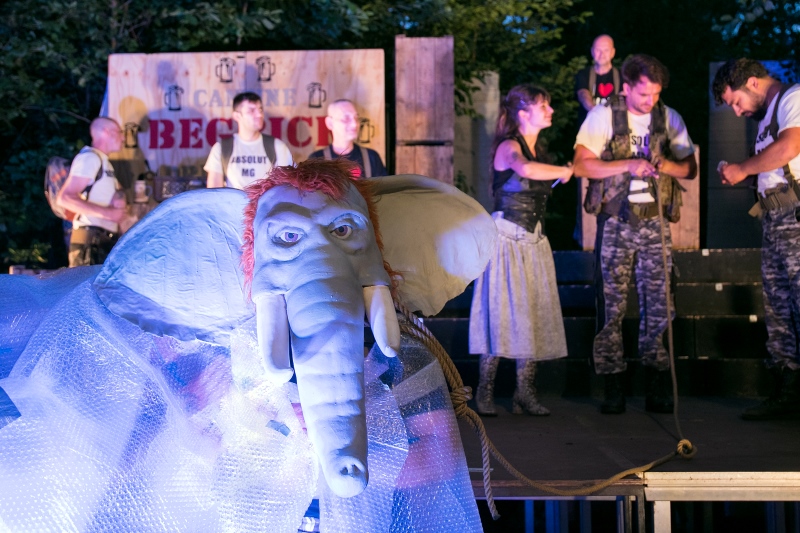
The packer Galy Gay wants to buy a fish. The water is boiling. The task is clear. But Galy Gay cannot say no. He meets the widow Begbick, who persuades him to buy a cucumber instead of a fish. A group of marauding soldiers observe the scene. They have lost a man during a raid on a pagoda. But the roll call by the feared sergeant, Bloody Five, is approaching. A replacement must be found! They persuade Galy Gay to fill in for a short time, but when their comrade remains missing, they involve him in a dubious deal involving an elephant. He innocently falls into the trap and is faced with the choice of being shot as a fraud or serving as a soldier from now on. The trains transport the army to Tibet and Galy Gay goes to war: a soldier, a tool, a war machine with marching orders.
In his comedy, which premiered in 1926, Brecht shows the logistics of loss of identity. Human beings are malleable – and worse still: they want to be. They adapt. First their name, then their shirt, then their attitude. Their own thoughts are drowned out by the chorus of the masses. Human beings become part of the apparatus – a cog that obeys. Held together by a uniform, legitimised by a badge and a passport. But who am I beyond my usefulness?
In the age of the masses – masses of unemployed, masses of refugees, masses of starving people, masses of infected people, masses of soldiers, masses of tourists – the interchangeability of individuals is a prerequisite for industrial development, exploitation of the earth and subjugation of foreign peoples. Character, as Brecht calls it, is irrelevant.
Capitalism does not tolerate stagnation. The endless trains, means of transport for goods, soldiers, labour. Maximum flexibility is mercilessly demanded of each individual and has a decisive effect on human relationships. Camaraderie only lasts as long as the individual is part of the mass that is constantly in motion. Pause? No way. Beyond the corps, there is no friendship. Anyone who doesn't jump on the train when the whistle blows is out, with no chance of return.
In a present in which identities are fluid, roles change and belonging has become fragile, MANN IST MANN seems like a grim commentary on the malleability of human beings, on their willingness to bow to pressure in a world that needs uniforms, not people.
The question arises: when did I actually stop examining things closely in the social fabric in which I was entangled, stop following my inner objections, even when my convictions were at stake; when did I give up perceiving outside influences as such; when did I stop taking uncertainties seriously; when did I begin to gloss over my own traces of damage by referring to the big picture?
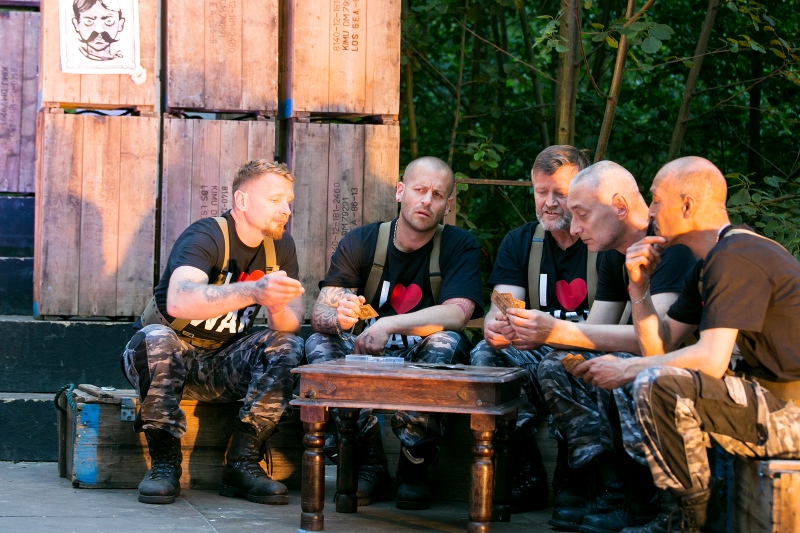
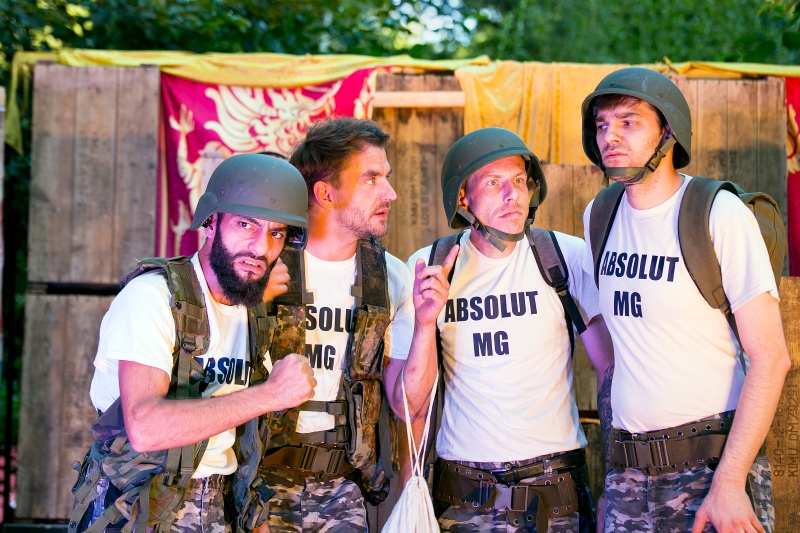
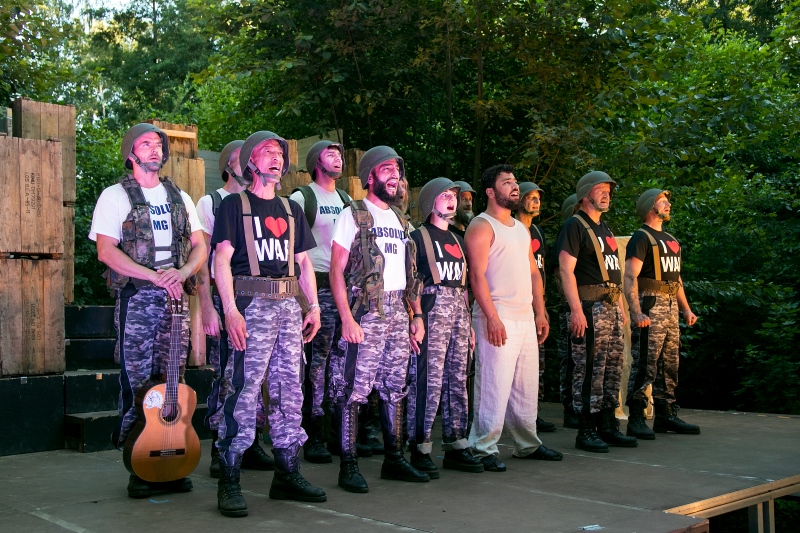
This summer, the aufBruch ensemble, consisting of ex-prisoners, day-release prisoners and an actress, tells the story of the man who cannot say no at the overgrown Gustav Böß open-air theatre in Jungfernheide.
A little favour between men never hurts.
The play will be performed by a mixed ensemble of day-release prisoners, former prisoners and an actress: Christian Krug, Juliette Roussennac, Jörg, Matthias Blocher, Max Sonnenberg, Mohamad Koulaghassi, Norman, Oliver, Ronny Mock, Sadam, Steffen, Sven-Eric.
Director Peter Atanassow Stage design Holger Syrbe Costume design Esther Lüchtefeld Dramaturgy Franziska Kuhn Musical Coach Vsevolod Silkin Production management Sibylle Arndt Assistant director Sarina Eckhoff Production assistance Jessica Schallat Graphic design Dirk Trageser
Tickets: 18 € / 12 € (reduced)
Ticket sale starts on 16th August 2025
Information on tickets and admission requirements
Funded by the German Class Lottery Foundation Berlin and the Berlin Senate Department for Culture and Social Cohesion.
In cooperation with the Jungfernheide cultural beer garden, JVA OV Berlin, Tegel Prison and the Charlottenburg-Wilmersdorf District Office.
aufBruch is supported by the Association of Friends and Sponsors of Prison Theatre in Berlin e.V. and numerous private donors.


Photos
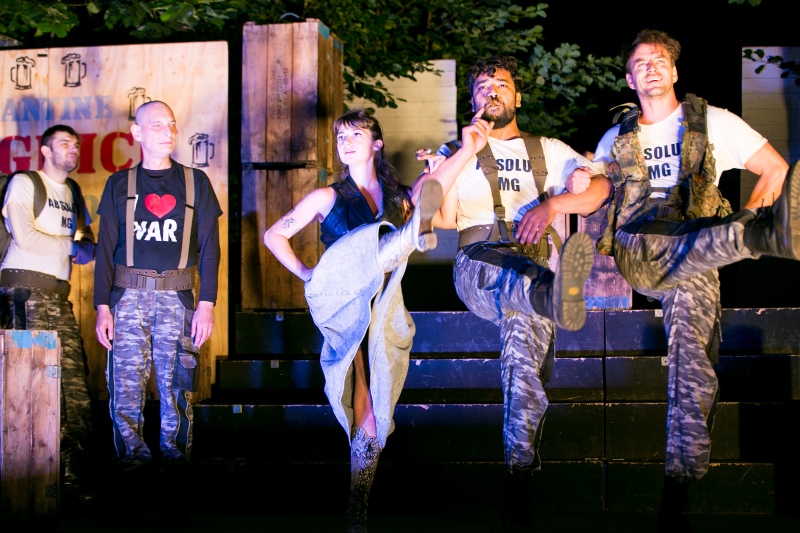
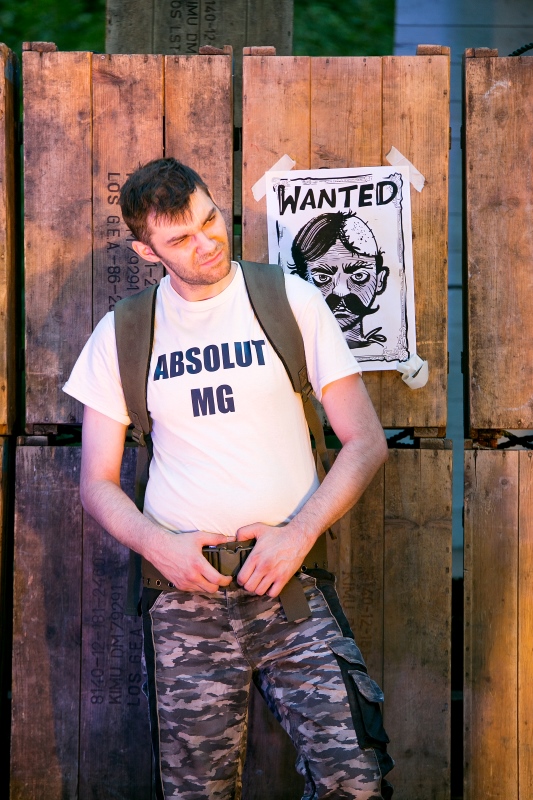
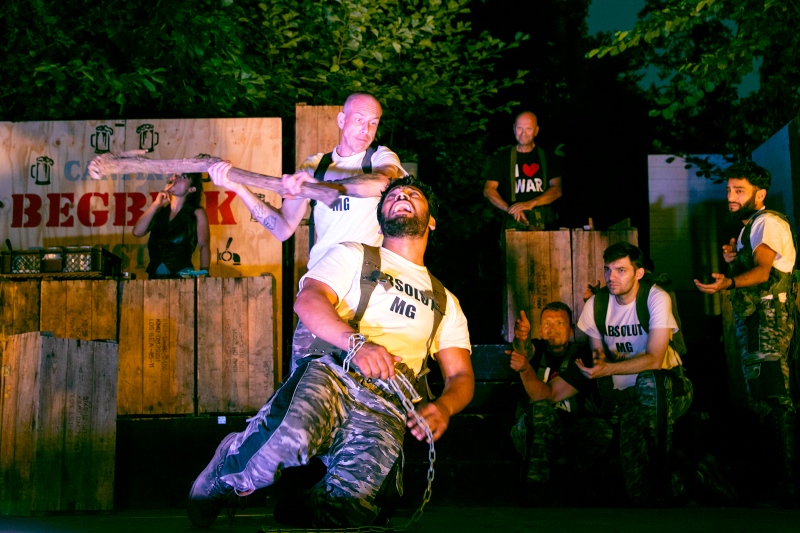

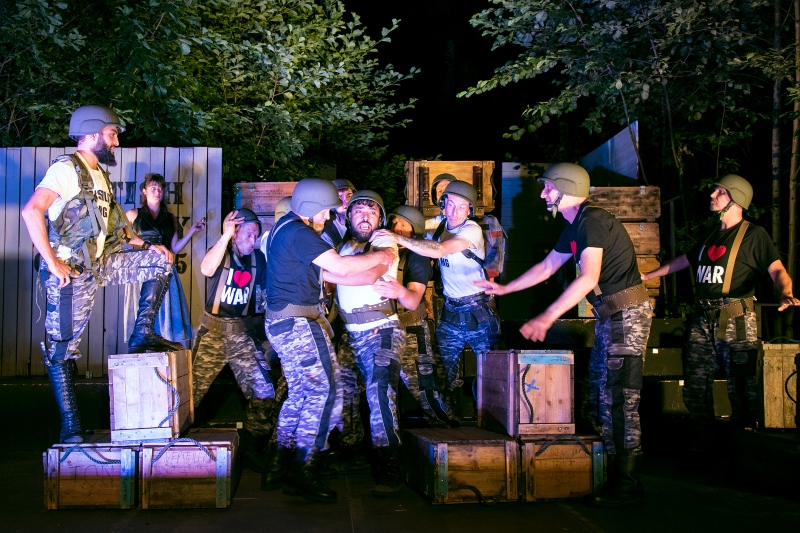
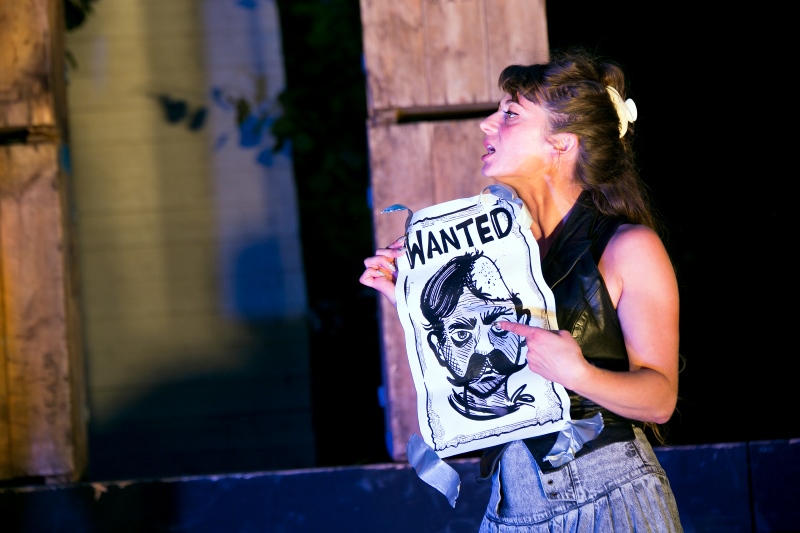
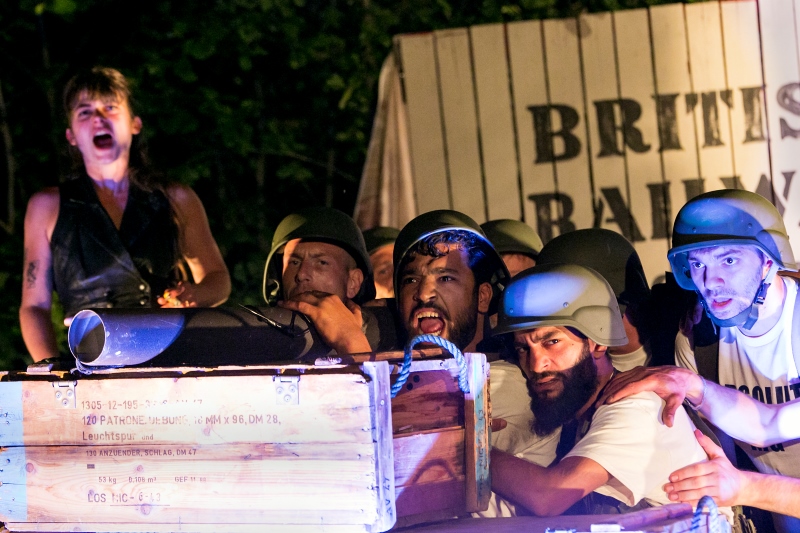
Photos: Mark Schulze Steinen
Any use only with the prior permission of aufBruch.
Press

Kriegsertüchtigung im finsteren Wald
Das Gefangenentheater aufBruch in Berlin hat mit Brechts „Mann ist Mann“ eine schrille Komödie zum aktuellen Mobilmachungsdiskurs inszeniert
von Tom Mustroph

Probe zu "Mann ist Mann" des Gefängnistheaters Aufbruch
Im Gefängnistheater "Aufbruch" stehen Häftlinge als Schauspieler auf der Bühne. Nun inszeniert das Projekt im Freilufttheater Jungfernheide Bertolt Brechts "Mann ist Mann".
von Nele Freiding

Brechts „Mann ist Mann“ auf der Freilichtbühne
Bertolt Brechts frühes Lustspiel „Mann ist Mann“ legt in der Inszenierung von Peter Atanassow den Fokus auf soldatisches Mitläufertum und militärischen Konformismus.

Berliner Theater feiert Premiere – plötzlich steht ein Elefant auf der Bühne
Das Berliner Gefangenentheater „aufBruch“ feierte am 27. August eine weitere Premiere – mit Überraschungen und unter tosendem Applaus.
von Jana Wengert

Ein Mann geht aus dem Haus – und landet an der Front
Wovon soll sich ein Mann fremdbestimmen lassen? Von seiner Frau, vom Staat oder lieber vom Militär? In Brechts „Mann ist Mann“ fragen sich die Häftlinge des Berliner Knasttheaters, wie ein Mensch zur Kampfmaschine wird. Die Antwort ist erschreckend einfach.

Im Schraubstock
Nichts zu verlieren: Das Berliner Gefangenentheater »aufBruch« gibt eine leicht angereicherte Fassung von Brechts »Mann ist Mann«

Brechts Parabel von der Verwandlung des Packers Galy Gay in den Militärbaracken von Kilkoa als witzig-ironisches Freilufttheater

Performance Venue:
Gustav-Böß-Freilichtbühne in der Jungfernheide
Access via:
Kulturbiergarten Jungfernheide
Heckerdamm 274
13627 Berlin.
Directions:
U7 „Halemweg“
plus a 20-minute walk